Make the next decision with confidence.
Changes take too long. Documentation is thin. Your team needs a clear starting point.
- Application and architecture review
- Cloud readiness and dependency mapping
- A prioritized modernization roadmap
.NET EXPERTISE. PRACTICAL AZURE MODERNIZATION.
Modernize aging .NET applications, connect disconnected systems, and build a clear path to Azure—with a plan your team can execute.
20 minutes · No obligation · A conversation about your goals
WHERE WE HELP
Changes take too long. Documentation is thin. Your team needs a clear starting point.
Disconnected systems and aging interfaces make everyday work harder than it needs to be.
Turn architecture decisions into implementation work your engineers can own.
Map one business-critical application, surface risks, compare options, and leave with a scoped action plan.
Improve and evolve C# and .NET systems in manageable steps that protect important existing behavior.
Understand application dependencies and plan a tested, phased move to Azure.
Connect older applications and newer services with clear contracts and failure handling.
The right design fits your business. That may mean improving the existing application, creating a modular structure, or introducing services where they add value.
A FOCUSED FIRST ENGAGEMENT
Understand your options before committing to a large project.
Designed for technology leaders responsible for a business-critical .NET application, integration backlog, or Azure migration.
Book a Discovery CallFixed scope and fee agreed before work begins.
You provide agreed access to documentation, code, and key stakeholders. Implementation and a formal security audit are separate engagements.
HOW WE WORK
Understand your goals, system constraints, and business priorities.
Compare options and agree on a practical target and migration sequence.
Test the highest-risk assumptions with a focused proof of concept.
Guide implementation, review decisions, and transfer knowledge to your team.
ILLUSTRATIVE CLIENT SCENARIO · AI-ASSISTED MODERNIZATION
Before modernizing a system, understand the business rules it already protects.
Imagine a client with a business-critical C# application maintained by several developers over many years. Orders still process, but documentation is thin. Before moving to Azure, the team needs to know which rules must survive the transition.
A small pricing method reveals the challenge: preferred customers receive a discount, but the reasoning behind that decision is not documented. Rewriting it without understanding it could change customer invoices.
With client-approved tools and permitted code, AI can summarize the method, identify dependencies, and suggest tests. An engineer checks those suggestions against the source, calling code, and business requirements. AI cannot tell us whether an undocumented rule is still the right policy.
public decimal CalculateTotal(Order order)
{
    var total = order.Items.Sum(
        item => item.Price * item.Quantity);

    if (order.Customer.IsPreferred)
        total *= 0.90m;

    return total;
}
The code applies a 10% discount to preferred customers. It does not establish tax, rounding, or refund policy; those questions need further investigation.
[Theory]
[InlineData(true, 90)]
[InlineData(false, 100)]
public void PreservesExistingPricing(
    bool preferred, int expected)
{
    var order = MakeOrder(
        preferred, price: 50m, quantity: 2);

    Assert.Equal((decimal)expected,
        new PricingService().CalculateTotal(order));
}
Abbreviated xUnit example: MakeOrder is a test fixture helper;
Order and PricingService represent the application's existing
types.
In this scenario, the team would confirm the discount policy with the business owner, document the rule, and add tests for relevant edge cases. Only then would it extract or refactor the pricing logic and compare behavior before and after the change.
The intended outcome: a reviewed rule inventory, regression tests, and a clearer migration plan. AI supports the investigation; engineers and business owners remain responsible for the decisions.
YOUR CONSULTING PARTNER
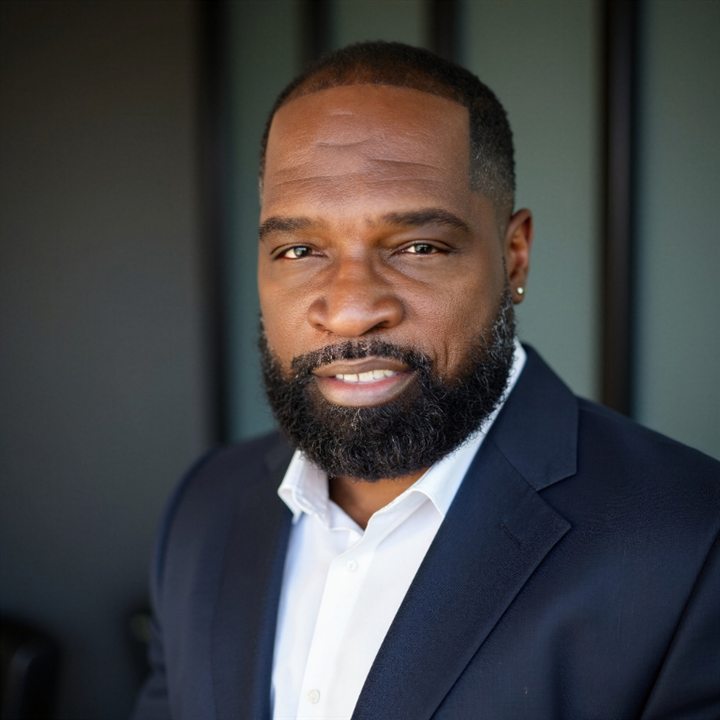
Founder · IntelliArch AI Consulting LLC
Florida-based · Remote engagementsMEET THE FOUNDER
Charles brings software engineering leadership and hands-on Microsoft architecture experience to application modernization.
His background includes C#, .NET, Azure, SQL Server, API integrations, and hospitality technology, along with leading onshore and offshore engineering teams.
He helps teams understand complex systems, make informed architecture decisions, and turn those decisions into practical delivery plans. AI-assisted development supports the work, with human review and engineering validation.
Book a Discovery CallLET’S TALK ABOUT YOUR APPLICATION
Choose a time for a 20-minute conversation with our team. We’ll discuss your challenge, priorities, and whether an assessment makes sense.
Each call lasts 20 minutes. Need another time? Send an inquiry.
PREFER TO WRITE FIRST?
Describe your application, integration challenge, or modernization goal. Your inquiry goes directly to IntelliArch.
BEFORE WE TALK
No. We start by understanding what works and where change is needed. Incremental improvements may be the most practical option.
Yes. Advisory, code reviews, reference implementations, and engineering coaching can support your team’s delivery.
No. The initial 20-minute conversation is free. A detailed assessment has an agreed scope and fee before work begins.
AI can assist with code understanding, documentation, and development. Outputs require review and validation, and use of client material is agreed before work begins.